The threat of fire is a critical safety consideration in any setting, be it residential, commercial, or industrial. Fire protection does not only depend on the observation of the regulation but also on the choice of the appropriate firefighting equipment in response to an emergency, in order to respond rapidly and efficiently. To business people and facilities that have an interest in protecting lives and property, it is imperative to know the difference between sophisticated and straightforward firefighting devices. It is easy to make the right decisions that facilitate the safety requirements and legal standards, with reputable fire fighting equipment suppliers in Kenya playing a crucial role in the provision of reliable solutions.
Among the suppliers that the firm has trusted in the region is the Blackwood Hodge (Kenya) Ltd, which is a leading supplier of advanced solutions in power, material handling, and water in the East African region. Although it is particularly well equipped in power and industrial machinery, Blackwood Hodge also provides firefighting products, both in the form of the necessary individual equipment and complete systems, so that they can assist businesses with an effective fire safety system in the fast-growing urban and industrial market of Kenya.
Understanding Basic Fire Fighting Equipment
Basic firefighting equipment comprises basic tools that are meant to be used in immediate and manual intervention. These are usually easy to use and are designed to regulate or put out the fire at the initial stages before it spreads. They are easy to install in a home, office, shops, small warehouses, and other environments that are associated with a moderate risk of fire.
Typical instances of basic firefighting equipment are:
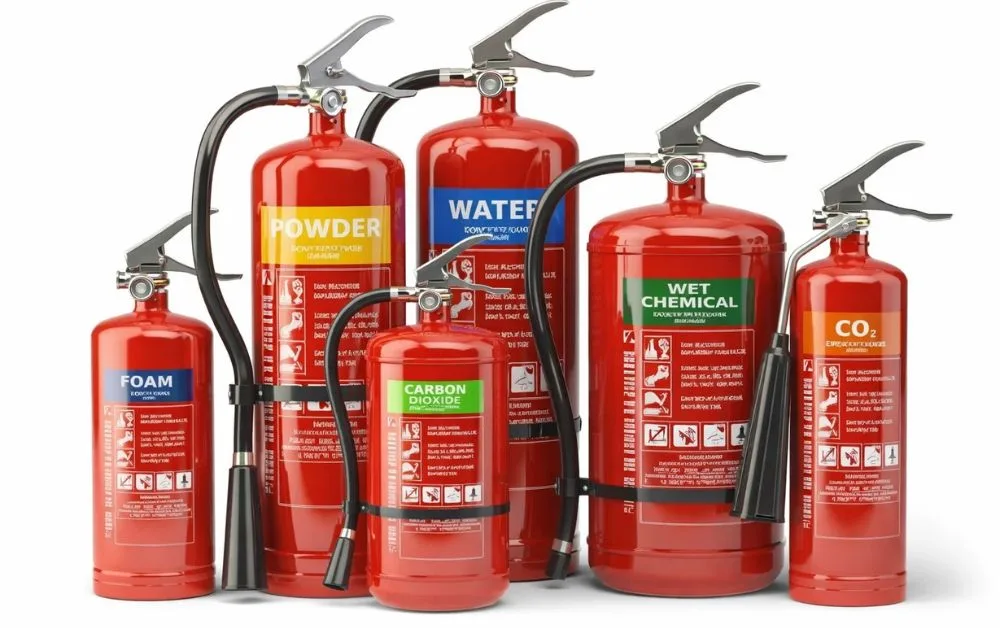
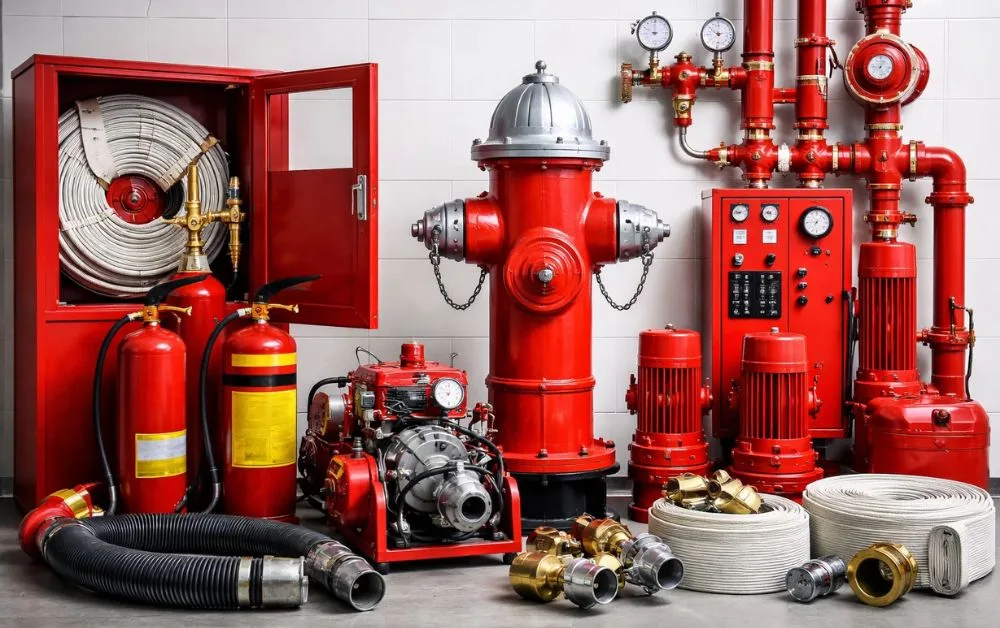
- Fire Extinguishers: Water-filled, foam-filled, dry chemical-filled, or CO2-filled small fire extinguishers. Both types are applicable to certain fire types, where water extinguishers should be used when addressing paper and wood fires, and CO2 should be used in electrical fires.
- Fire Buckets: Conventional buckets filled with either sand or water, which can be handy in the quick response to small local fires.
- Fire Blankets: These are made out of a material that has fire-resistant properties and are applied to the flames on the individual or a small space.
- Fire Hoses and Nozzles: These are the manual hoses attached to a source of water that can help in guiding water to a fire at the base.
Simple equipment is usually either portable or installed. They are manual and workable in small fires or can be used immediately as a response to a small fire before the arrival of professional fire services. These types of equipment are the very first line of defense.
What Is an Advanced Fire Fighting Equipment?
Advanced firefighting equipment, in turn, is more high-tech and usually automated equipment that is oriented towards bigger areas, greater risk of fire, and more complicated conditions. These are systems customized to fit such environments as large business offices, industrial facilities, hospitals, and campuses where fire threats may be more pronounced and even catastrophic.
Some of the sophisticated firefighting equipment is:
- Fire Suppression Systems: There are systems that are integrated, such as automatic sprinklers, gas suppression systems, and foam deluge systems, which are able to detect and respond to fire without manual intervention.
- Fire Alarm and Detection Systems: Systems of smoke, heat, and flame sensors all connected to central monitoring systems that raise an alarm, and suppression systems that quickly follow.
- Hydrant Systems: This includes the huge water distribution systems in buildings where fire hoses and pumps are placed, which are safe to use when addressing fire in large buildings.
- Thermal Imaging and Remote Sensors: Hi-tech devices that are used to identify hot spots and other likely hazards before they become full-fledged fires.
These systems are very likely to need professional design, installation, and maintenance. They can be connected with the automation systems of real-time monitoring, emergency notifications, and organized reactions. Advanced systems are also necessary in high-risk environments or where human intervention might not be prompt enough due to the complexity and automation of the advanced systems.
Related read:-How Fire Fighting Equipment in Kenya Helps Reduce Fire Risks?
Key Differences at a Glance
| Function | Basic Equipment | Advanced Equipment |
| Operation | Manual | Automatic or semi-automatic |
| Complexity | simple devices | integrated system with sensors and Controls |
| Best Use | Small spaces, low-risk zone | Large buildings, high-risk zone |
| Maintenance | Basic checks | Professional servicing, and testing |
| Response Time | Depends on human action | is immediate, and can be automated |
| Examples | Extinguishers, fire blankets | sprinklers, alarm networks |
These differences are helpful in enabling organizations to select the most appropriate fire safety setup depending on the nature of the risks and the legal requirements of that area. Poor fire safety might lead to increased destruction and be very dangerous to the protection of occupants and legal obligations.
Selecting the appropriate firefighting equipment
The choice of the correct firefighting equipment begins with a fire risk assessment. This analysis is based on the structure of the building, type of occupancy, fire load, and safety precautions. The combination of simple and complex equipment will usually offer a multi-layered defense where simple equipment is used as an immediate response, and advanced equipment as long-term management of hazards.
Collaborating with experienced suppliers of firefighting equipment in Kenya will mean that businesses will be provided with customized services to fit international safety standards, as well as local laws. Suppliers who possess a broad portfolio, such as Blackwood Hodge (Kenya) Ltd, are in a position to steer an organization through all procedures, including evaluation, setup, and upkeep, to ascertain adequate fire protection attuned to a specific environment.
Conclusion
In a nutshell, although simple firefighting equipment is required in case of immediate and manual response in small fires, complex firefighting equipment will be a solution in providing an automated and detailed protection in larger and riskier situations. All types have their purpose, and a combination of both offers the best coverage of fire safety. Selecting the appropriate combination requires demanding planning and reliable associates.
To get consistent solutions to both the basic and the advanced fire safety requirements, the services of the seasoned fire-fighting equipment suppliers in Kenya, such as Blackwood Hodge (Kenya) Ltd, can prove to be the difference between securing people, properties, and business continuity.