
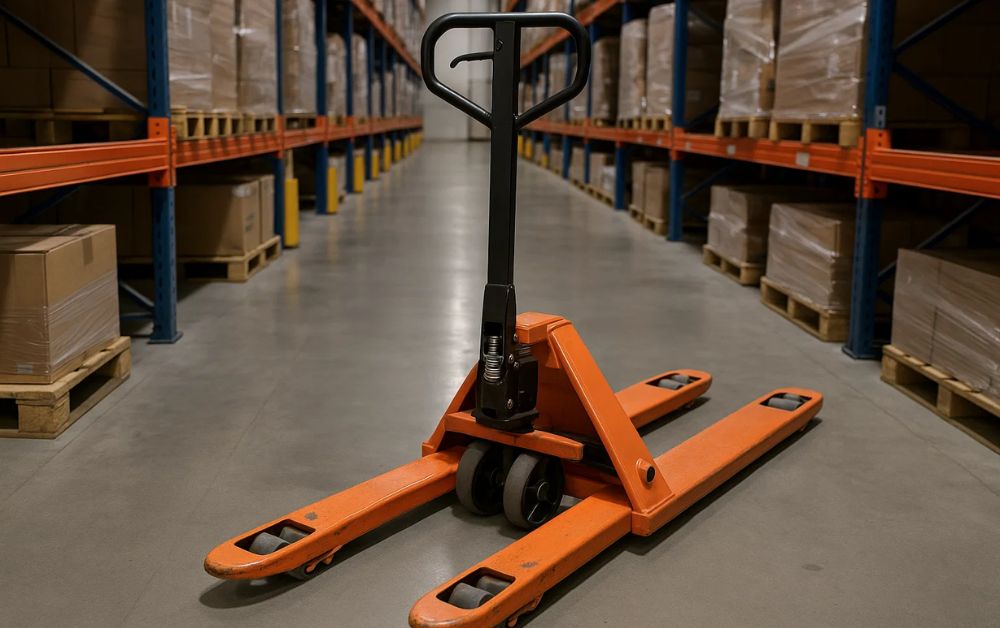
In the current competitive logistics and warehousing environment, any business intending to remain relevant in the market would probably start its search with the phrase pallet trucks supplier in Kenya and that is where a leading player in the industry, such as Blackwood Hodge (Kenya) Ltd, is situated. Blackwood Hodge (Kenya) Ltd, as a market leader in providing power, material handling, and water solutions in East Africa, has decades of experience and a robust product portfolio, such as hi-tech pallet trucks, that it can export to the region.
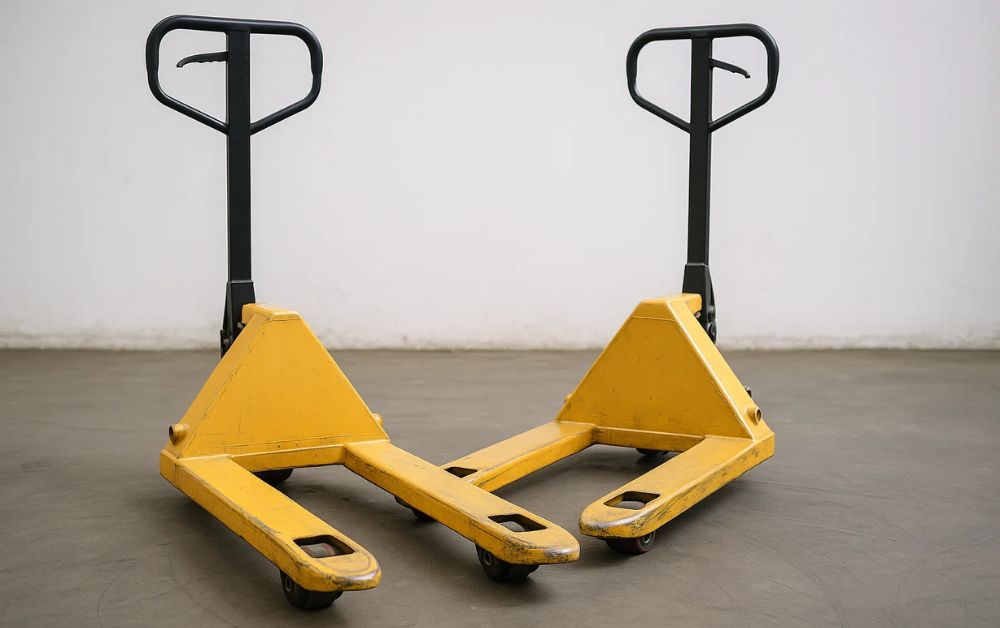
With the increasing need to have efficient, safe, and sustainable material handling in the material handling industry, the pallet truck is being transformed into a humble form. Gone are the days when pallet trucks were merely a manual device used to transfer goods; it is becoming a more intelligent and automated machine and will soon become the new era of warehousing and logistics.
Change initiated by the market trends.
The pallet truck sector in the world, which is estimated to be USD 33.8 billion in 2024, is expected to expand considerably in the coming decade. The driver of this rush is the growth of e-commerce, the rise of third-party logistics (3PL) vendors, and the overall trend of automation and supply-chain efficiency across the world.
It is also worth noting that electric and lithium-ion pallet trucks already take an increasing number of shares on the market, and automated and semi-automated devices are likely to take their place within a few years (between 2025 and 2035). This change is an opportunity to modernize material processing infrastructure for companies in East Africa and other global regions, with West Africa suppliers such as Blackwood Hodge (Kenya) Ltd usually taking the leading position as the anchor supplier.
Automated and Smart Pallet Trucks: What Do These Mean?
Conventional pallet trucks are manually operated in terms of walking, lifting, and transporting pallets; automated ones, on the contrary, employ a set of technologies, including sensors, artificial intelligence, onboard navigation, and connectivity to work without or with minimum human involvement.
Key capabilities include:
- Autonomous navigation: These trucks map the layout of warehouses, identify obstacles, and navigate aisles safely with the help of LiDAR, cameras, or other sensors.
- AI-influenced routing and scheduling: Intelligent pallet trucks can optimize transport paths, prioritize, and dynamically adjust to changes in the operations of the warehouse.
- Connectivity and fleet control: These machines provide control over loads via integration with warehouse management systems (WMS) or warehouse execution systems (WES) to provide real-time tracking, maintenance planning, and load management, and provide increased operational visibility.
- Battery and energy efficiency: newer models use lithium-ion batteries, which have longer run times, faster charging, and less environmental impact than lead-acid batteries or manual truck models.
The advantages of Smart Material Handling and Automation
1. Improved Productivity and Effectiveness
Automated pallet trucks are able to operate overnight, and thus the throughput is highly enhanced as compared to manual control. They minimize waste time, speed up the flow of loads, and enable warehouses to address harried fulfillment timeframes – a significant merit in the e-commerce or retail supply chains of high demand.
2. Better Safety and Ergonomics
Warehousing has been known to be connected with heavy lifting and repetitive strain that causes injuries and fatigue. The responsibility is taken by automated pallet trucks, thus decreasing the physical burden of the workers. They also reduce the chances of accidents on the congested warehouse floors since they have sensors and collision-avoidance systems.
3. Cost Savings in the Long Run
Initial capital expenditure on automated pallet trucks could be more expensive than the conventional manual pallet trucks; however, the long-term gains, such as reduced labor expenses, less downtime, fewer injuries, and even a leaner operation organization, would lead to the ultimate optimal returns on investment.
4. Environmental Protection: Sustainability and Energy Efficiency
With businesses around the world aiming to achieve their green supply chains, the use of pallet trucks that run on lithium-ion batteries and are controlled with innovative systems helps decrease the level of energy consumption and emissions, and promotes more environmentally friendly activities, which is highly appreciated by both stakeholders and regulators.
Related read:-Top 5 Advantages of Using Lowara Water Pumps in Your Water Management System
The Future of Pallet Trucks: What Pieces of Furniture Will Next?
Integrated Automation of Smart Warehouses
Automated pallet trucks are now emerging as the main elements of the more extensive innovative warehouse ecosystems – linked with conveyors, robotic arms, automated storage/retrieval systems (AS/RS), and central warehouse execution software (WES). Combined, these technologies can facilitate the whole process, receiving, picking, and dispatch.
Fleet Orchestration and IoT / Telematics
With the increasing fleets switching to automated trucks, firms will use the IoT and telematics to understand the utilization of the fleets, monitor the health of the battery, proactively maintain the fleet, and optimize the deployment of the fleet, increasing the uptime and reducing the downtime.
Diversified and Mixed Solutions to Multiple Markets
Where complete automation is not yet an option, a transitional solution will be hybrid pallet trucks, which will have the benefit of improved ergonomics and halfway automation at less cost.
Environmentally Friendly and Green Design
Materials, battery technologies, energy recovery systems, and environmentally friendly designs are increasing in significance because companies strive to decrease carbon footprints and to comply with overall sustainability objectives.
Applicability to East Africa and Role of Blackwood Hodge (Kenya) Ltd
To businesses in Kenya and the East African region, these trends on the global front are a strong opportunity. With the increased warehousing, retail, manufacturing, and distribution within the area, the demand for modern material handling is going up, and companies that enter the search for pallet truck suppliers in Kenya will show a greater inclination to companies that provide advanced, automated, and sustainable solutions.
The Blackwood Hodge (Kenya) Ltd, which has a history of existence of more than seven decades, is well placed to provide and even maintain such solutions. Their existing product line-up consists of electric and lithium-ion low-lift pallet trucks of well-known brand names such as CLARK, and has a load capacity of 1500 kg to 2000 kg based on the model used.
Blackwood Hodge can assist East African warehouses to upgrade safely, efficiently, and sustainably by not only supplying equipment, but also end-to-end services – selection, maintenance, and so on.
Conclusion
It is evident that the way forward in warehousing and logistics is automation, intelligence, and sustainability. With the manual pallet jacks replaced by smart, connected, and automated pallet trucks, even in such areas as East Africa, operational efficiency, safety of workers, and environmental responsibility will increase significantly.
To companies in Kenya and other countries aiming to modernize their material handling processes, the first search option is to type in the search term, which is; pallet trucks supplier in Kenya and the company that appears as the best fit to provide the company with modern and futuristic handling solutions can be Blackwood Hodge (Kenya) Ltd. Through these innovations, firms are able to place themselves at the center of success in the changing world logistics.